
The 2026 Virtual Sport Forum in Lausanne: A few reflections
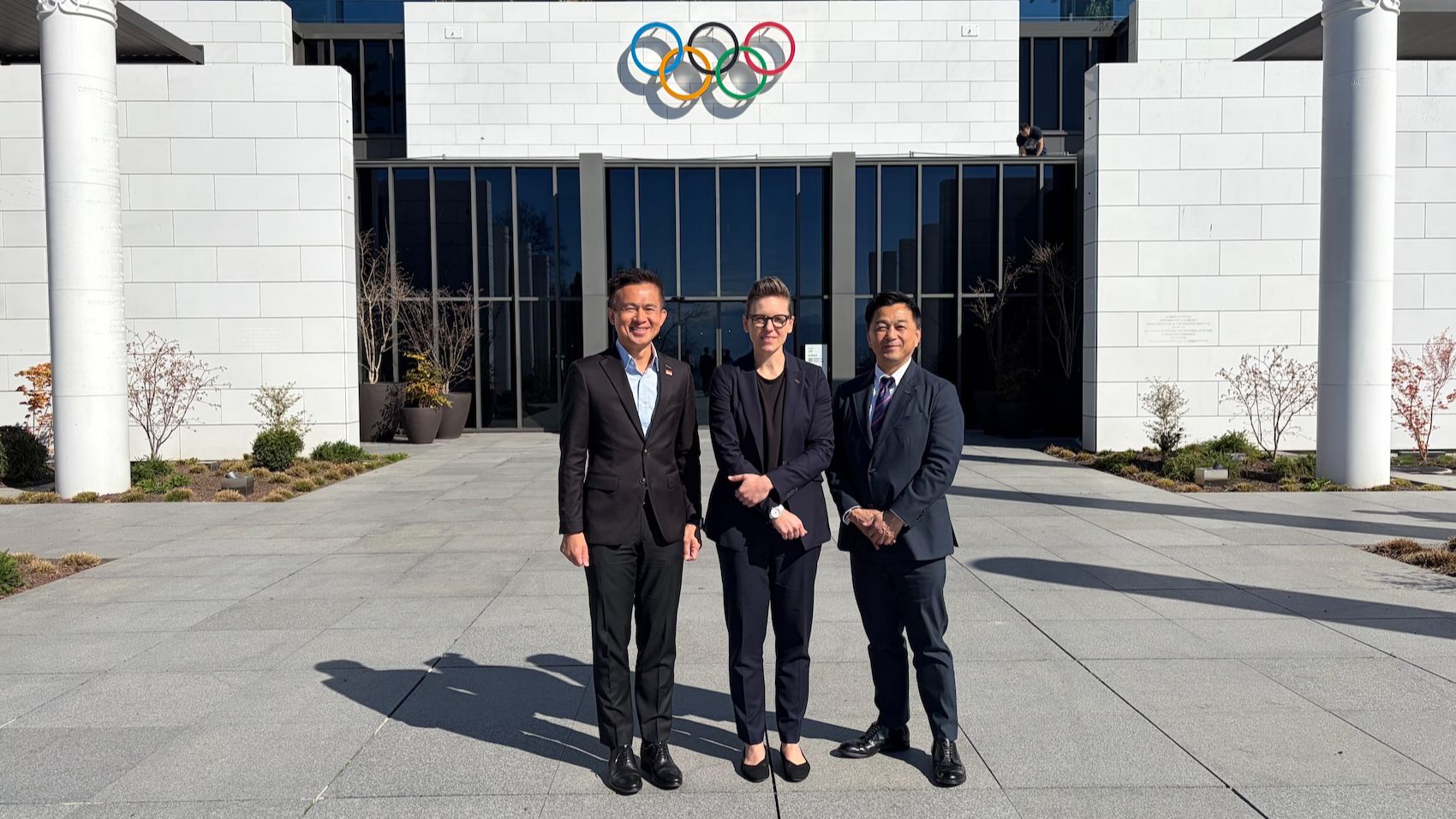
I'm in Lausanne, home of the International Olympic Committee – IOC , and I am grateful to be here. Yesterday, I spent time at the Olympic Museum. If you haven’t been, it is quietly striking. Green grounds stretch toward the lake, framed by snow-capped mountains, with spaces that invite pause and reflection. Inside, decades of Olympic history sit alongside the stories of athletes who have shaped generations. The walls, statues, and archives speak of legacy and human excellence, and the people of Lausanne seem to carry that same sense of pride.

I was here to present on behalf of QUT and the Japan Sport Council, moderating a session of mini case studies on virtual sport, esports, and the skills shaping tomorrow’s workforce. Now in its third year, the Virtual Sport Forum has become a point of convergence for conversations around technology, engagement, and innovation in sport. It reflects a broader shift within the Olympic Movement, a recognition that remaining fit for purpose requires not only preserving tradition, but continually adapting to how new generations connect, compete, and learn.
My presentation focused more on ways of engaging with various sports technologies (virtual sport being one of several) as both a tool and vehicle to bolster communities engaging with the sporting system, positioning participation as a conduit for learning, applied capability, and research and innovation.
This creates pathways where engagement develops transferable skills that extend well beyond sport itself. Participants are not only competing; they are also broadcasting events, managing operations, officiating in real time, and contributing across business, creative, and technology domains. In doing so, they build practical experience that translates into roles across economic, social, diplomatic, and adjacent sectors.
Sport has long provided opportunities for connection, skill development, and community engagement, but traditionally in structured, often slower-moving systems. What virtual and esports bring is agility, adaptability, and a highly connected environment—tools that refresh and accelerate how sport engages participants, audiences, and broader ecosystems. In this context, virtual sport becomes less about format and more about function, strengthening not only athlete-centred systems but the wider networks that support culture, innovation, opportunity, and fan engagement. At QUT, our sport team is actively experimenting in this space, constantly learning by dovetailing esports and traditional sports, with teams merging and creating shared insights that inform practice across both domains.
Building on these practical applications, the case studies presented at the forum from Japan, Singapore, (us Aussies), and other international contexts revealed a consistent theme.
Virtual sport is not a replacement for physical sport. It is an extension, opening additional pathways for inclusion, innovation, and workforce development.
Examples discussed at the forum illustrated this in different ways. Platforms such as MyWhoosh, Refract, and Concept2 each originated from practical challenges, whether environmental constraints, new forms of interaction, or the need for precise and repeatable performance data. What connects them is not the technology itself, but how it enables participation, community, and progression.
Structured competition reinforces this shift. For example, "eFIBA" (FIBA’s national team esports competition played on NBA 2K Pro-Am mode), demonstrates how traditional sporting structures can extend into digital environments. It integrates national identity, governance, and competition in a format that meets younger audiences where they already engage. Online qualification leads to in-person finals, while integrity measures, education, and production standards maintain legitimacy. The result is a system that feels familiar in structure but different in delivery.

Alongside performance and participation, health, wellbeing, and duty of care remain central. Dr Jane Thornton outlined how the IOC’s safeguarding, injury prevention, mental health, and clean sport initiatives are increasingly relevant in esports. As structures become formalised, with contracts, pathways, and high training volumes, parallels with traditional sport become clear. Olympic data shows roughly one in six athletes experience injury or illness during competition, with about one month per year lost to these factors (IOC Medical and Scientific Department, 2023). Her research suggests targeted prevention strategies can reduce risk by up to ~50 percent. While esports does not mirror these risks directly, Jane highlighted that the same intentionality is required in designing and managing environments.
Japan offers another perspective. Following esports’ formal recognition in 2025, national initiatives have focused on integrating it into broader high-performance systems, leveraging expertise in science, coaching, and athlete support. Virtual sport is also positioned as a point of access, connecting communities and enabling participation across diverse segments.
Across these discussions, a consistent idea emerges: virtual sport operates as a bridge. It connects physical and digital environments, education and industry, curiosity and applied capability. Individuals can enter the system at different points, develop skills, and move between contexts with greater fluidity. In doing so, it supports not only performance outcomes, but also the growth of a workforce capable of operating across disciplines.

Upcoming major events highlight this potential. Students engaged today through esports, virtual sport, and interdisciplinary learning will become part of the workforce delivering championships and games events, shaping what follows. High-performance principles such as discipline, feedback, and adaptation are not confined to athletes, they are characteristics of effective systems. Applied broadly, they influence organisational learning, team operation, and capability development over time.
Ultimately, the more important question is not what virtual sport is, but what it enables: what happens when curiosity is embedded into system design, participation is intentionally linked to learning, and engagement becomes a pathway, not an endpoint.
A sincere thank you to the Japan Sport Council and World Rowing for this year’s event.
IOC Medical and Scientific Department. (2023). Athlete Health and Wellbeing Surveillance Data. International Olympic Committee.
Thornton, J. (2026). Health, Safeguarding, and Performance Principles in Esports. Virtual Sport Forum, Lausanne.